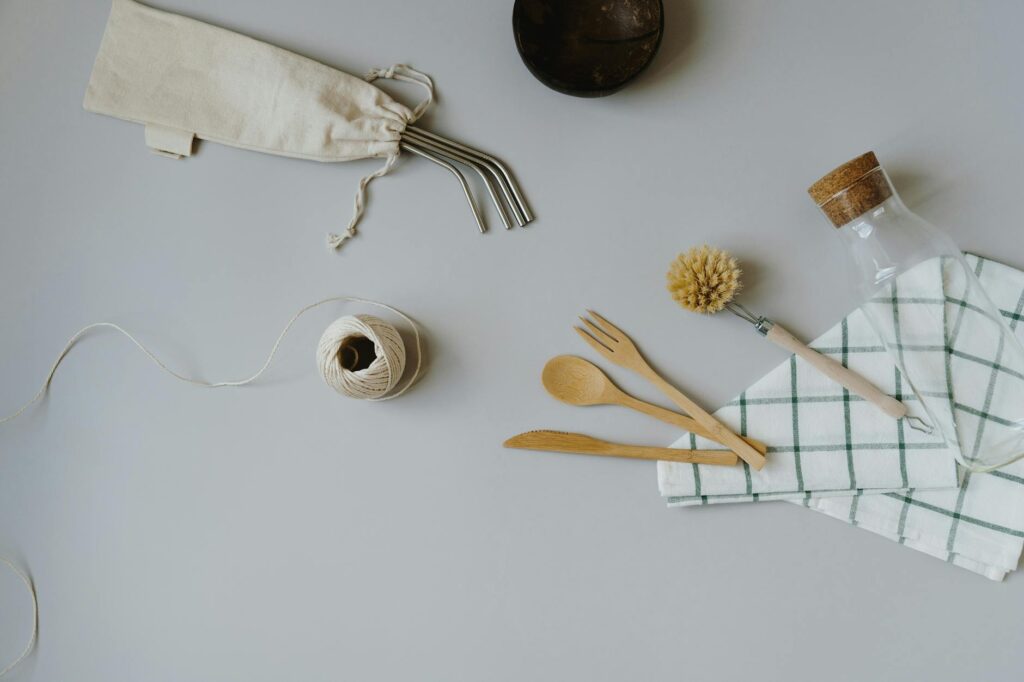
Quick Verdict
The sustainable kitchen products India market has finally matured in 2026, offering excellent eco-friendly alternatives that don’t compromise on quality or affordability. These eco-friendly kitchenware options score a solid 4.3/5 for combining durability, style, and environmental responsibility at prices that make sense for Indian households. Most products are readily available on both Amazon India and Flipkart with decent return policies.

Key Specifications
| Price Range | ₹199–₹2,000 |
| Main Features | Bamboo cutting boards, coconut shell bowls, steel straws, cloth produce bags, wooden spatulas |
| Compatibility | All kitchen types, dishwasher-safe options available |
| Best For | Health-conscious families, eco-warriors, modern Indian kitchens |
Design and Build Quality
The sustainable kitchen products India offers in 2026 have come a long way from the flimsy alternatives we saw five years ago. Bamboo cutting boards now feature anti-slip grips and juice grooves, matching the functionality of plastic boards while looking stunning on your kitchen counter.
Coconut shell bowls arrive with a smooth, food-safe finish that handles both hot sambar and cold raita without any issues. The craftsmanship on wooden spatulas and ladles shows attention to detail, with properly sanded edges that won’t scratch your non-stick cookware.
Steel straws come with cleaning brushes and carrying pouches, making them practical for both home use and office lunch breaks. The cloth produce bags use organic cotton that survives repeated washing without losing shape – crucial for Indian households that shop for vegetables multiple times a week.
Performance and Daily Usage
In daily Indian cooking scenarios, these eco-friendly kitchenware items perform surprisingly well. The bamboo cutting boards handle everything from chopping onions for tadka to rolling chapati dough. They’re naturally antibacterial, which is brilliant for our humid climate.
Coconut bowls maintain temperature better than plastic, keeping your morning curd cool longer. Steel straws work perfectly with everything from lassi to filter coffee, and the wider ones handle thick mango shakes without clogging.
The wooden utensils withstand high-temperature cooking better than plastic ones that melt when left on the kadai edge. They don’t conduct heat like metal spoons, so you won’t burn your fingers while stirring dal.
Cloth bags prove invaluable during vegetable shopping trips to local mandis. They’re breathable, keeping produce fresh longer than plastic bags – particularly useful for leafy vegetables in Indian summers. Most sets include different sizes for everything from small green chillies to large bottle gourds.
Maintenance and Longevity
These products require slightly different care than conventional kitchenware. Bamboo boards need occasional oiling with coconut oil to prevent cracking. Wooden utensils shouldn’t be soaked in water for long periods.
With proper care, most items last 2-3 years of heavy use – actually outlasting many plastic alternatives. The steel straws are practically indestructible, while cloth bags survive hundreds of washes.
Pros and Cons
Pros:
- Completely biodegradable and non-toxic materials
- Better heat resistance than plastic alternatives
- Aesthetic appeal that enhances kitchen décor
- Support local artisans and cottage industries
- No microplastics leaching into food
- Most products priced competitively with quality plastic items
Cons:
- Require more maintenance than plastic products
- Not all items are dishwasher-safe
- Initial investment higher than cheap plastic alternatives
- Limited colour options compared to synthetic products
- Some wooden items can retain strong spice odours
Who Should Buy Sustainable Kitchen Ware?
Perfect For
- Health-conscious families worried about plastic contamination
- Environmentally aware millennials setting up their first kitchen
- Anyone dealing with allergies or sensitivities to synthetic materials
- Instagram-savvy home cooks who want photogenic kitchenware
- Parents looking for safer alternatives for children’s meals
Skip If
- You prefer dishwasher-only cleaning for all kitchenware
- Budget
Related Articles